R221 Atlantic hay meadows
Description
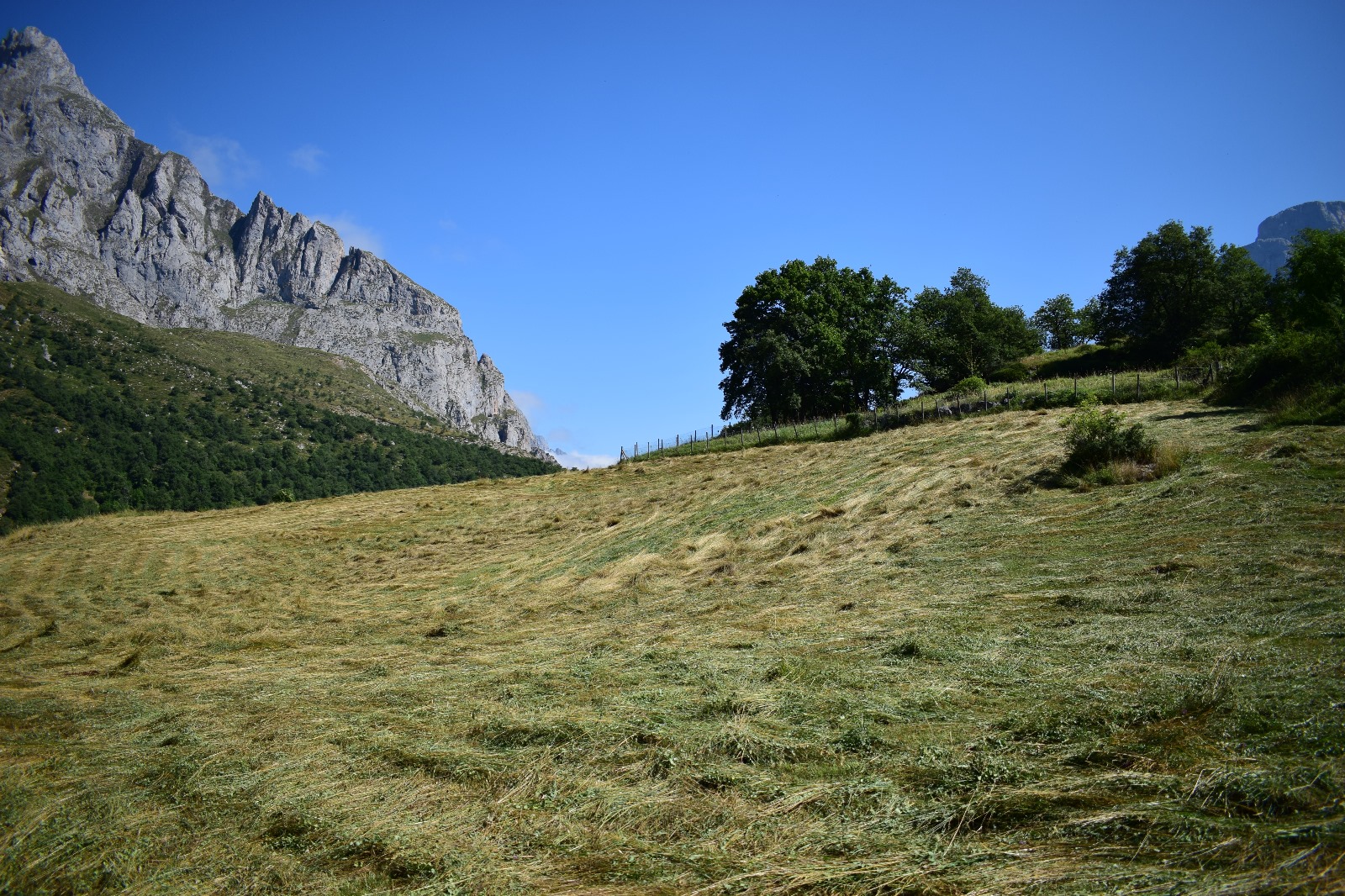
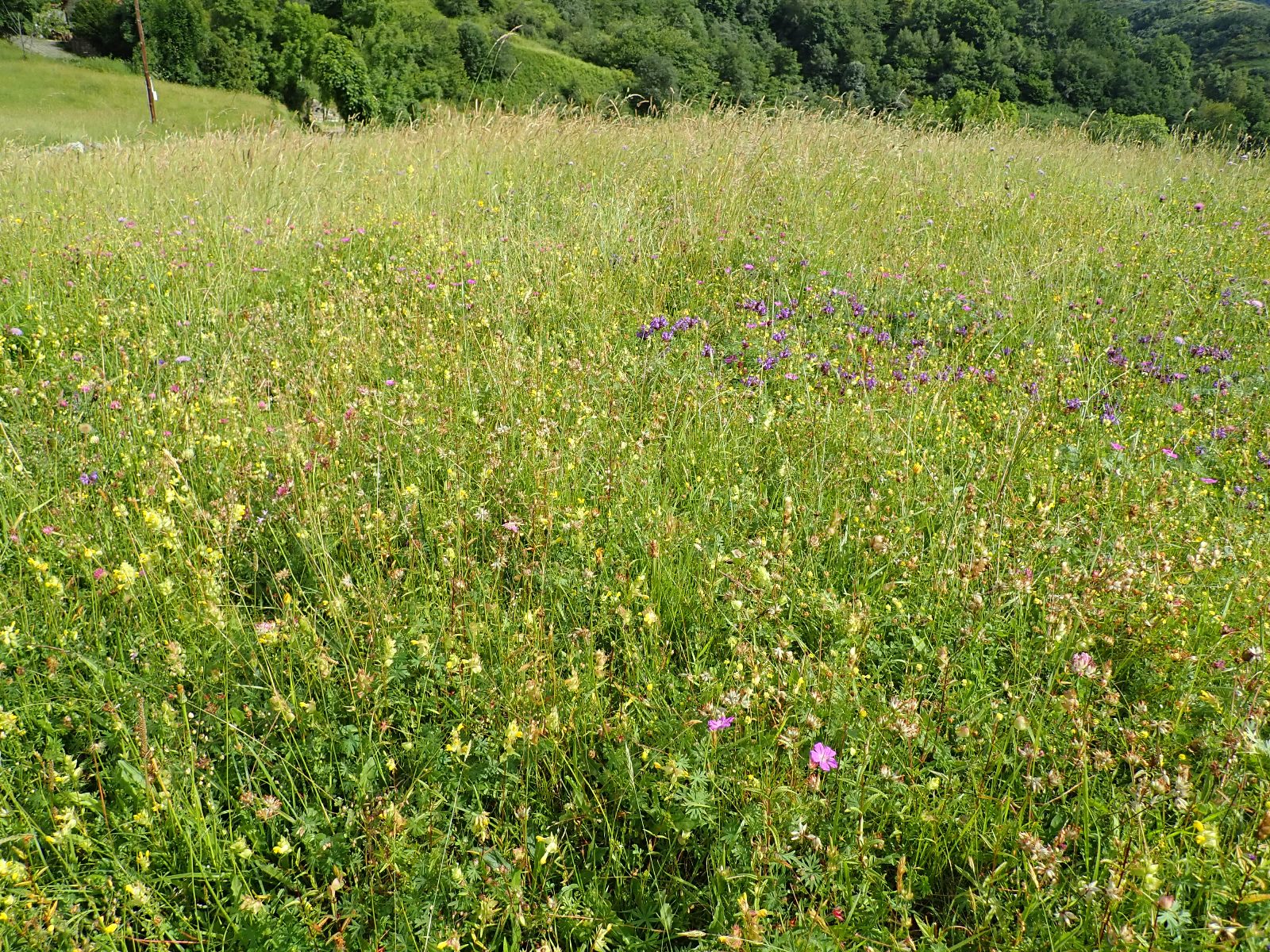
Mesophile hay meadows subjected to one or few cuts per year, with grazing absent or restricted to brief early-spring or late-autumn periods. Traditional practices based on low-intensity management maintain high-diversity communities dominated by grasses and mesophytic herbaceous species providing hay to feed the cattle in winter.
Protection
Protected by the EU Habitat Directive under the code 6510 ("Lowland hay meadows (Alopecurus pratensis, Sanguisorba officinalis)").Floristic Composition
Frequent species
Indicator species
Phytosociology
- Agrostio castellanae-Arrhenatheretum bulbosi
- Malvo moschatae-Arrhenatheretum bulbosi
Relations with other habitat types
Since the existence of a core of dominant species of tall grass across all the study area prevents the statistically sound recognition of, in particular, elevational variants like those distinguished by EUNIS as R22 and R23 (the latter including a unit specific to the area: R2314 [“Northern Iberian submontane hay meadows"]), all regional hay meadows are united under a single level IV umbrella category, R211 having been chosen for the evocative allusion to the Atlantic in its name.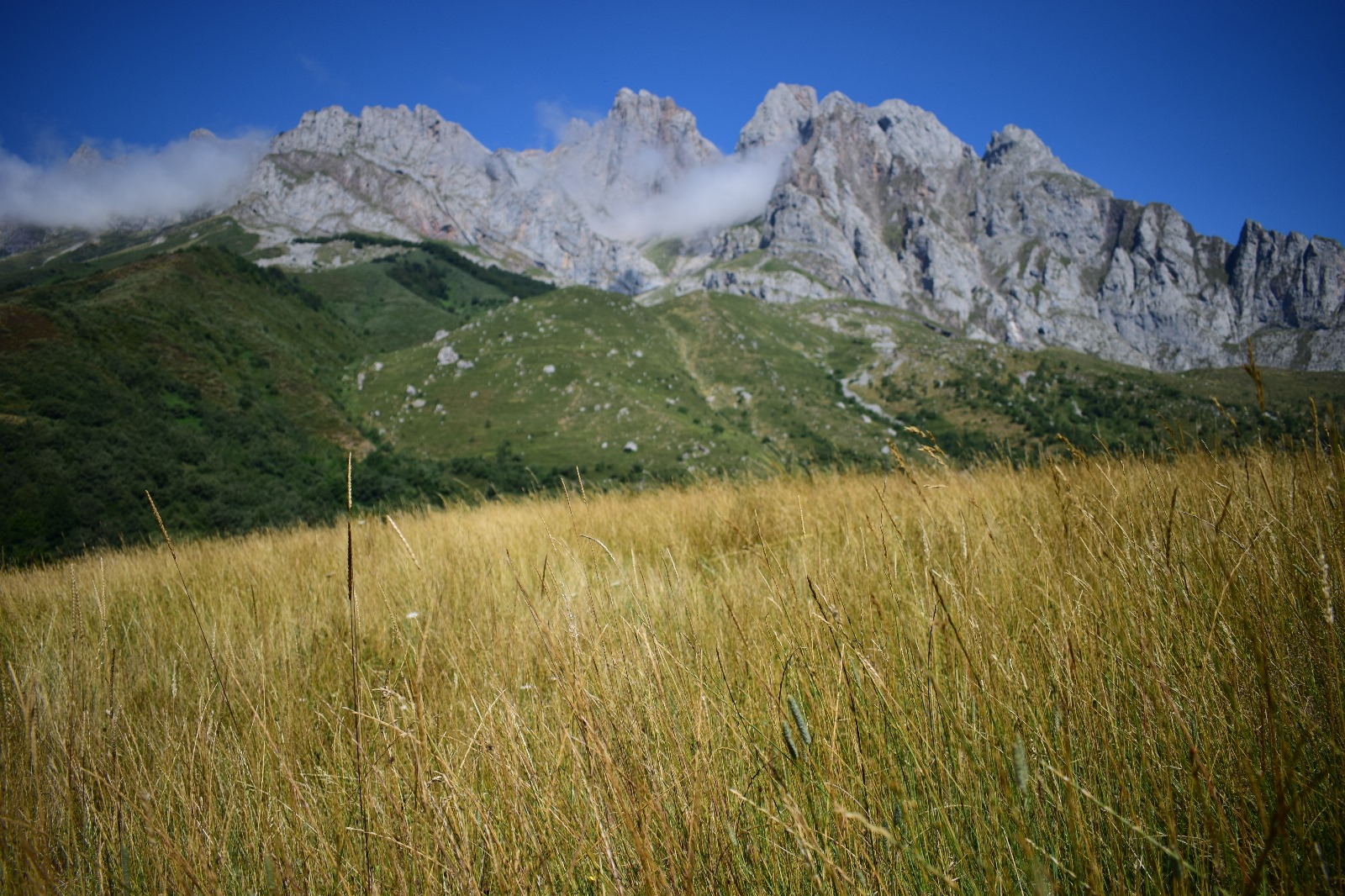
Regional distribution
Under the oceanic climate of the northern territories, barely summer-dry if at all, these meadows may be present in zonal areas with varied aspects and inclinations, in areas potentially forested by T172, T182, T1Bx and T1E1. To the submediterranean south, however, especially when the effect is compounded by an orographic shelter from the ocean, they are mostly restricted to valley bottoms, often requiring irrigation channels which, by buffering the effect of winter frosts and summer drought, promote suitable conditions for meadow plants throughout the year. In any case, these communities are experiencing a rapid demise everywhere: especially in mountain areas, lands traditionally exploited as hay meadows are being abandoned altogether, whereas in those still managed, mechanised mowing and silage in plastic, by enabling much more frequent cuts at almost any season (overcoming the original bottlenecks brought by the necessity of abundant labour and the long, dry days of high-summer to cure the hay), are generating impoverished grasslands akin to R211, even occasionally plowed, reseeded with commercial fodder varieties and sprayed with artificial fertilizers.
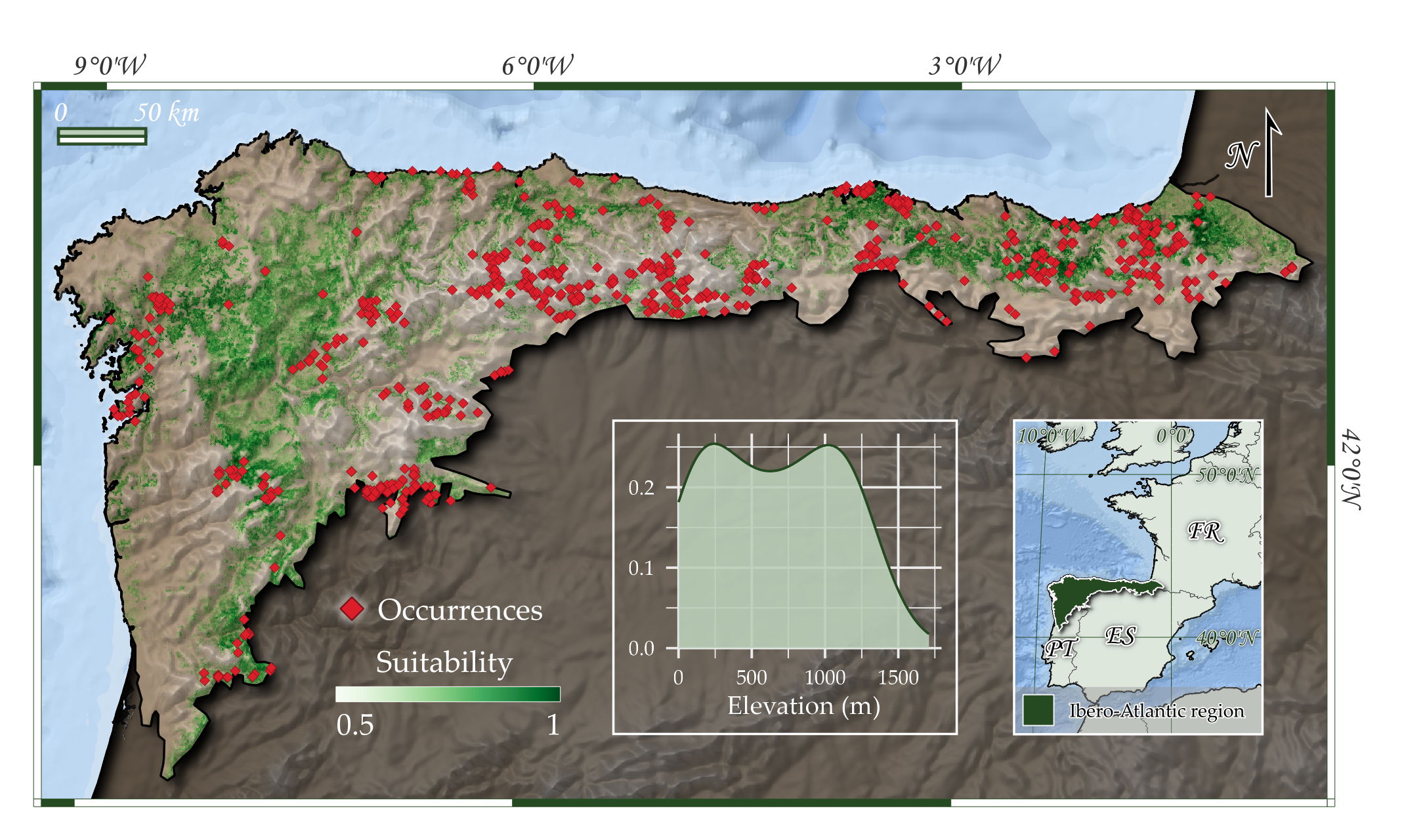
Known occurrences and potential area of occupancy of the habitat type in the study region.